
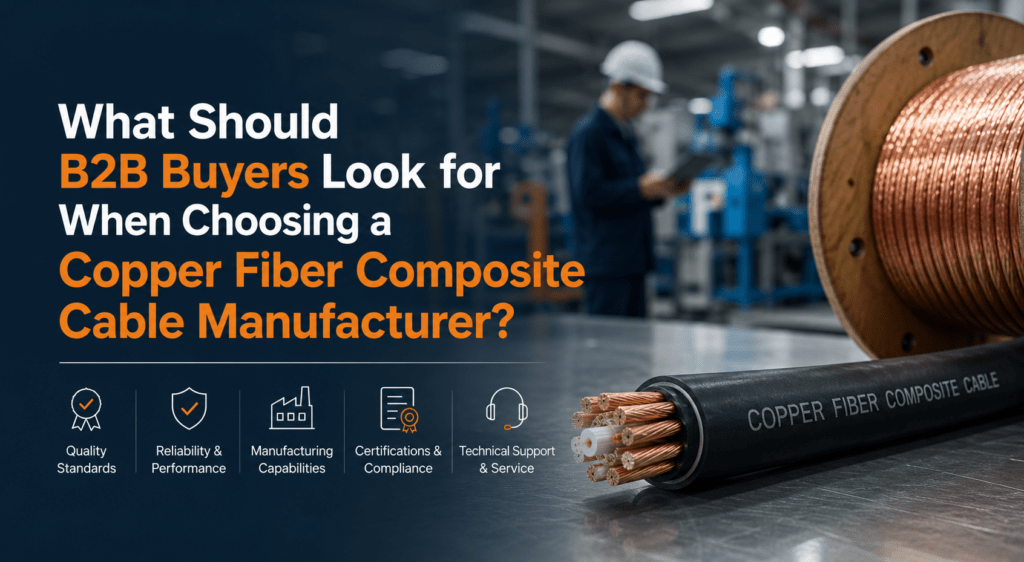
Introduction: Why Supplier Selection Matters More Than Ever
Telecom operators, system integrators, engineering contractors, and infrastructure developers face increasing pressure to deploy reliable communication networks while controlling project costs and delivery schedules.
When sourcing copper fiber composite cables, many buyers focus primarily on product specifications and pricing. However, procurement teams understand that supplier selection often has a greater impact on project success than the cable itself.
A supplier’s manufacturing capability, customization support, quality control process, lead time stability, and technical expertise can directly influence installation efficiency, network reliability, and long-term maintenance costs.
Choosing the wrong supplier may result in inconsistent product quality, project delays, increased maintenance costs, and higher total cost of ownership.
For this reason, choosing the right copper fiber composite cable manufacturer is not simply a purchasing decision. It is a strategic procurement decision that affects project performance, delivery schedules, and overall return on investment.
This guide explains the key evaluation criteria B2B buyers should consider before issuing an RFQ or selecting a long-term manufacturing partner.
What Is a Copper Fiber Composite Cable?
A copper fiber composite cable combines optical fibers and copper conductors within a single cable structure.
The optical fibers provide high-speed data transmission, while the copper conductors deliver electrical power. This dual-function design reduces infrastructure complexity and minimizes installation costs.
Copper fiber composite cables are widely used in:
- Telecom networks
- Wireless communication systems
- Surveillance infrastructure
- Smart city projects
- Industrial automation
- Transportation systems
- Remote monitoring applications
For many infrastructure projects, combining power and communication into a single cable improves deployment efficiency and simplifies network architecture.
Applications in Modern Infrastructure Projects
Understanding where these cables are used helps buyers evaluate supplier experience and project suitability.
Telecom Network Deployments
Telecom operators use copper fiber composite cables to support communication equipment requiring both power and data connectivity.
Wireless Base Stations
The cable enables streamlined installation for distributed antenna systems and communication infrastructure.
Smart City Infrastructure
Municipal projects often require integrated connectivity solutions that support surveillance, traffic management, and monitoring systems.
Industrial Automation
Factories and industrial facilities benefit from reduced cable complexity and improved system reliability.
Security and Surveillance Systems
Power and data transmission through a single cable reduces installation costs and simplifies maintenance.
Different applications often require different cable structures, environmental ratings, and customization options. Therefore, selecting a manufacturer with strong engineering capabilities becomes a critical procurement consideration.
Buyer Decision Factors When Choosing a Copper Fiber Composite Cable Manufacturer
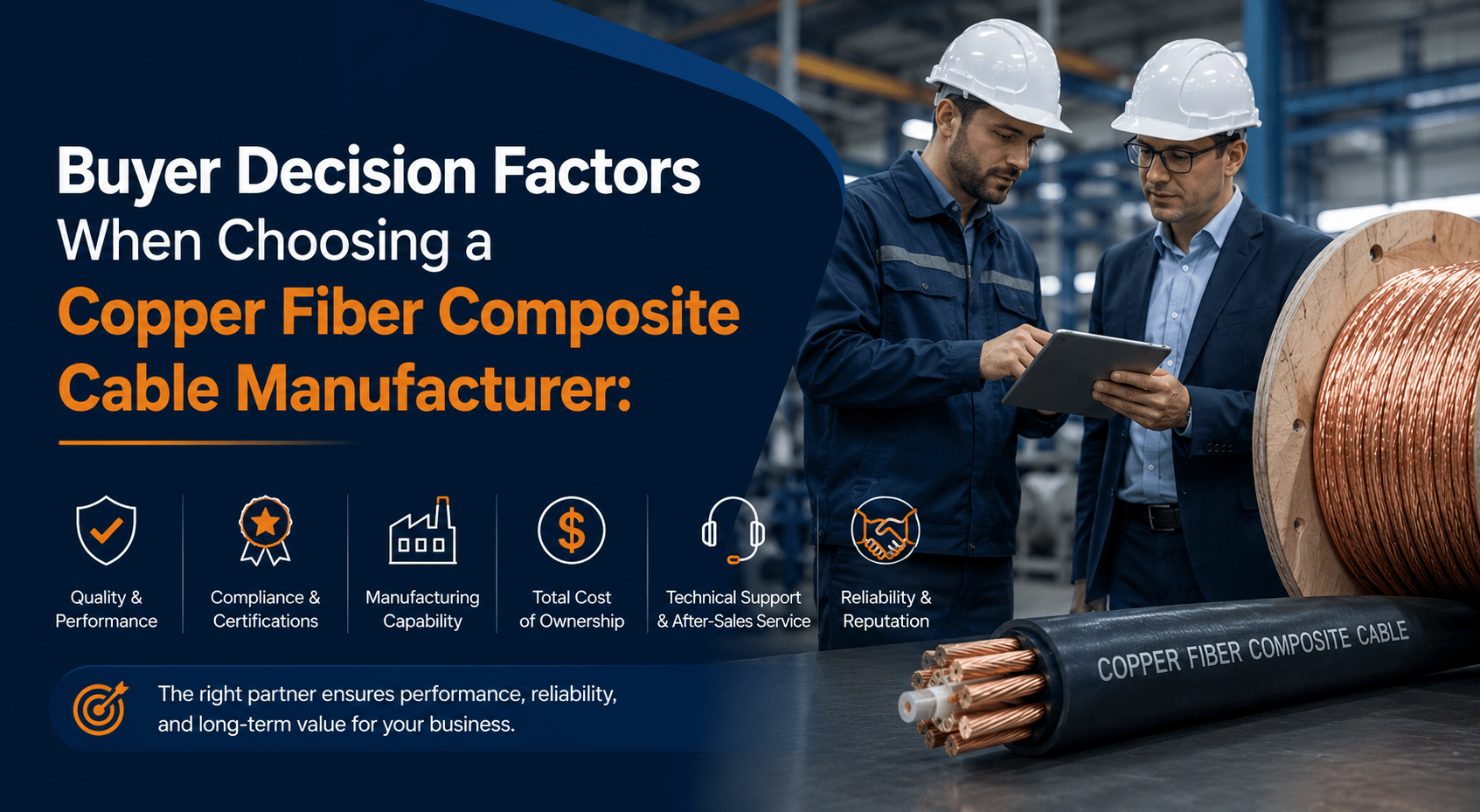
This section should be the primary focus for procurement teams.
1. OEM Manufacturing Capability
One of the first questions buyers should ask is whether the supplier is an OEM manufacturer or simply a trading company.
OEM manufacturers generally provide:
- Better quality control
- Greater customization flexibility
- Faster technical support
- Competitive pricing
- Stable production management
For large infrastructure projects, direct OEM partnerships often reduce procurement risk and improve project visibility.
BaymroTech positions itself as an engineering-focused OEM supplier capable of supporting customized project requirements.
2. Customization Capability
Every project has unique technical requirements.
Buyers should evaluate whether a manufacturer can customize:
- Fiber count
- Copper conductor specifications
- Cable diameter
- Armoring options
- Jacket materials
- Environmental protection ratings
Limited customization options may create compatibility issues during deployment.
3. Quality Assurance and Testing
Reliable manufacturers maintain documented testing procedures throughout production.
Request evidence of:
- Optical performance testing
- Electrical performance testing
- Mechanical testing
- Environmental testing
- Factory inspection reports
Comprehensive testing reduces failure risk after installation.
4. MOQ Requirements
Minimum Order Quantity can significantly affect procurement planning.
Before issuing an RFQ, buyers should confirm:
- Standard MOQ
- Prototype order support
- Sample availability
- Volume discount structure
Flexible MOQ policies can be particularly valuable during pilot projects and network expansion phases.
5. Lead Time Stability
Delayed cable delivery can impact entire project schedules.
Procurement teams should evaluate:
- Standard production lead times
- Emergency production capability
- Raw material sourcing stability
- Historical delivery performance
Reliable lead times often become a key differentiator between suppliers.
6. Industry Experience
Manufacturers with experience in telecom and infrastructure projects are often better prepared to meet project requirements.
Ask suppliers for:
- Project references
- Case studies
- Industry certifications
- Customer success stories
Proven experience reduces supplier qualification risk.
7. Technical Support Capability
Technical support is often overlooked during supplier evaluation.
Strong manufacturers provide:
- Product selection assistance
- Engineering consultation
- Installation recommendations
- Troubleshooting support
This support can significantly improve deployment success rates.
Procurement Risks and Common Supplier Selection Mistakes
Many procurement challenges occur because buyers focus solely on price.
Risk 1: Choosing a Supplier Without OEM Capability
Trading companies may have limited production visibility and reduced quality control oversight.
Risk 2: Lack of Product Testing Documentation
Without test reports, buyers may struggle to verify actual performance specifications.
Risk 3: No Customization Support
Standard products may not align with specialized project requirements.
Risk 4: Unstable Lead Times
Production delays can increase project costs and create deployment bottlenecks.
Risk 5: Limited Technical Support
Poor technical guidance can lead to installation issues and unexpected operational challenges.
Evaluating these risks before issuing an RFQ helps prevent costly procurement mistakes.
Copper Fiber Composite Cable Procurement Checklist
Before selecting a manufacturer, procurement teams should verify the following:
- OEM manufacturing capability
- Product customization options
- MOQ requirements
- Lead time commitments
- Product certifications
- Testing reports
- Technical support availability
- Project references
- Quality control procedures
- Supply chain stability
This checklist can help buyers compare suppliers using consistent evaluation criteria.
Why BaymroTech Is Considered by B2B Buyers
For telecom operators, engineering contractors, and system integrators, supplier reliability is often as important as product performance.
BaymroTech supports B2B customers through:
- OEM manufacturing capabilities
- Custom cable solutions
- Quality-focused production processes
- Technical consultation support
- Flexible project requirements
- Procurement-oriented service approach
Rather than acting solely as a product supplier, BaymroTech works as an engineering-focused manufacturing partner that helps organizations meet project objectives efficiently.
Frequently Asked Questions
What is a copper fiber composite cable?
A copper fiber composite cable integrates optical fibers and copper conductors into a single cable for simultaneous power and data transmission.
Why are copper fiber composite cables used in telecom projects?
They simplify infrastructure deployment by reducing the number of separate cables required for power and communication.
Can copper fiber composite cables be customized?
Yes. Many OEM manufacturers offer customization options based on project requirements, including fiber count, conductor design, and protective structures.
What certifications should buyers request from suppliers?
Buyers should request applicable quality certifications, testing reports, and compliance documentation relevant to their project requirements.
What is the typical lead time for large cable orders?
Lead times vary by manufacturer, order size, and customization requirements. Procurement teams should confirm lead times during supplier evaluation.
How can buyers verify supplier quality?
Buyers should review testing reports, certifications, factory capabilities, project references, and quality control procedures before issuing purchase orders.
Ready to Evaluate Your Next Copper Fiber Composite Cable Supplier?
If you are planning a telecom, infrastructure, surveillance, or industrial connectivity project, choosing the right manufacturing partner can significantly reduce procurement risk and improve long-term project performance.
Request a consultation or RFQ from BaymroTech today to discuss OEM capabilities, customization requirements, MOQ options, lead times, and project-specific cable solutions designed for your business needs.
Still comparing suppliers? Discover how the right OEM manufacturing partner can reduce project risk, improve delivery reliability, and help you achieve better long-term infrastructure performance. Contact BaymroTech for a customized RFQ evaluation today.
